
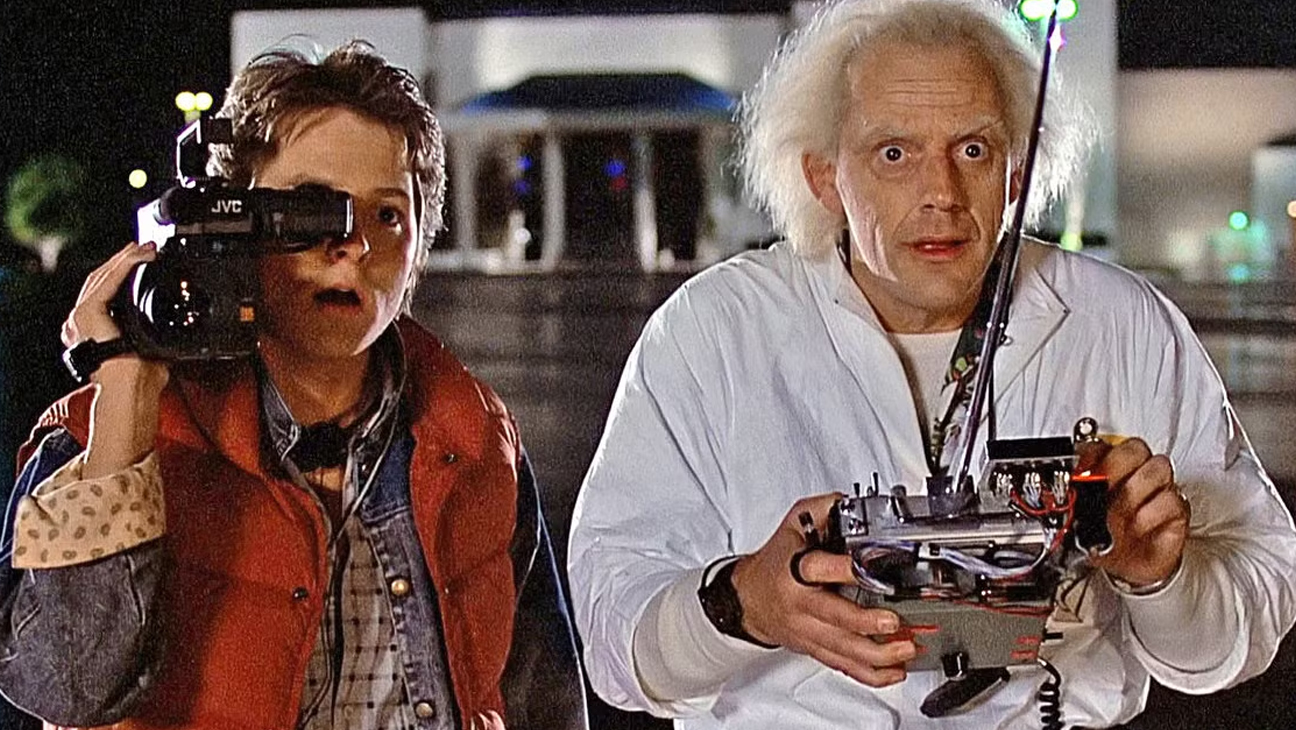
One of the most recognizable filming locations from the 1985 classic Back to the Future could be facing a very different future of its own. Puente Hills Mall in City of Industry, California, best known to movie fans as the fictional Twin Pines Mall, is being considered for redevelopment into a data center, potentially bringing an end to the location’s decades-long association with retail shopping.
The mall played an important role in the Robert Zemeckis-directed film, serving as the location where Marty McFly (Michael J. Fox) first travels through time in Doc Brown’s (Christopher Lloyd) modified DeLorean. More than 40 years later, the property remains a destination for fans of the franchise, even as its days as a traditional shopping mall have come to an end.
The History of Puente Hills Mall
Puente Hills Mall opened in the mid-1970s, during a period when enclosed shopping centers were becoming central gathering places for suburban communities across the United States. Located in the San Gabriel Valley, east of Los Angeles, the shopping center grew into a popular retail destination, offering department stores, specialty shops, restaurants and entertainment.
Like many shopping malls of its era, Puente Hills enjoyed its greatest success during the 1980s and 1990s, when malls were not simply places to shop but social destinations where families and teenagers gathered. Its location and expansive parking areas also made it attractive to Hollywood filmmakers looking for suburban settings.
Over the following decades, however, the mall experienced the same challenges facing shopping centers nationwide. The growth of online shopping, changing consumer habits, the decline of traditional department stores and the COVID-19 pandemic all contributed to reduced foot traffic and the departure of major retailers.
By the 2020s, much of the property had become vacant, although entertainment businesses such as AMC Theatres and Round1 continued operating. In August 2024, the property was purchased for approximately $115 million by an ownership group associated with RCB Equities and Real Estate Development Associates, opening the door to potential redevelopment.
Puente Hills Mall has also served as a gathering place for Back to the Future fans over the years, hosting anniversary celebrations, DeLorean displays and other fan events. One of the most notable was the 2015 celebration of Back to the Future Day on October 21, the date Marty McFly travels to in Back to the Future Part II. The mall’s parking lot has also attracted fans who recreate scenes from the original film, often arriving in replica DeLoreans and posing for photographs at the historic filming location. These gatherings have helped maintain the mall’s connection to the franchise long after its popularity as a shopping destination began to decline.
From Twin Pines Mall to Lone Pine Mall

For Back to the Future fans, Puente Hills Mall will forever be remembered as Twin Pines Mall, the location of one of the film’s most important sequences.
In the original 1985 movie, Marty McFly arrives at the mall parking lot in the early morning hours of October 26, 1985, to meet his eccentric friend, Dr. Emmett Brown. Doc has chosen the location to demonstrate his latest invention: a time machine constructed from a stainless-steel DeLorean DMC-12.
After sending his dog Einstein one minute into the future, Doc prepares to demonstrate the machine’s capabilities to Marty. However, their experiment is interrupted by Libyan terrorists seeking revenge against Doc for stealing plutonium. During the confrontation, Marty jumps into the DeLorean and accelerates across the parking lot, reaching 88 miles per hour and accidentally transporting himself back to November 5, 1955.
The mall’s name also provides one of the film’s cleverest examples of how changes to the past affect the future. When Marty arrives in 1955, he crashes into one of two pine trees growing on the property of farmer Old Man Peabody. Upon returning to 1985, Marty discovers that Twin Pines Mall has become Lone Pine Mall, a subtle indication that his actions 30 years earlier have altered the timeline.
Although the shopping center’s interiors were not central to the film, its exterior and parking lot became recognizable landmarks in movie history. The location has continued attracting Back to the Future enthusiasts, many of whom visit to photograph the setting where Marty made his first journey through time.
A Possible Future as an Industrial Complex
According to reporting by Newsweek, developers are considering plans to transform the largely vacant property into an industrial complex that could include warehouses, commercial buildings, a new bus transit station and a 10-megawatt data center.
Two redevelopment concepts have been outlined. One would create two large warehouse buildings, with the possibility of converting one into a data center. The other would combine industrial and commercial development, potentially incorporating a warehouse, data center and several smaller commercial buildings.
The proposals represent a significant departure from the property’s original purpose as a regional shopping destination. However, the redevelopment has not received final approval, and there is currently no confirmed timetable for construction or demolition.
The plans have also generated opposition from residents of nearby communities, including Rowland Heights and Hacienda Heights. Critics have expressed concerns about electricity and water consumption, noise pollution, air quality and the potential environmental impact of industrial facilities operating near residential neighborhoods.
In February 2026, the City of Industry approved zoning changes allowing battery energy storage facilities at locations such as the former mall. The decision drew criticism from residents concerned about the possible consequences of further industrial development. However, those zoning changes did not constitute approval of the proposed data center itself.
Bob Gale Responds to the Proposal
Back to the Future co-creator and co-writer Bob Gale has also weighed in on the proposed redevelopment. Speaking with The Independent in October 2026, Gale said decisions about the property’s future should ultimately rest with the people living in the surrounding communities.
Gale expressed concerns about the potential use of data centers for surveillance and questioned the considerable energy demands associated with artificial intelligence. He also joked about the possibility of the site being renamed after its fictional counterpart.
“Whatever it is, I think I’d prefer that it not be called ‘Twin Pines Data Center,’” Gale told the publication.
Could Part of the Mall’s Movie History Survive?
There may be at least one way for the property to retain a connection to Back to the Future, even if the shopping center itself is eventually demolished. According to a May 2026 report from Foothill Transit, plans for a replacement transit facility on the property include a proposed name: the Twin Pines Transit Center. The name was specifically chosen to acknowledge the location’s role in the film.
The proposed facility would include eight bus bays, passenger shelters and a restroom for bus operators. The transit agency has been working with the developers on plans to replace the existing transit center, which has operated at the mall since 1999.
Whether any other elements of the property’s cinematic history will be preserved remains unclear. The redevelopment proposals have not established whether the original filming locations, parking areas or other recognizable features could survive.
For longtime shoppers, the potential loss of Puente Hills Mall represents the disappearance of a community gathering place that served generations of Southern California residents. For movie fans, it could mean losing another tangible piece of Hollywood history.