
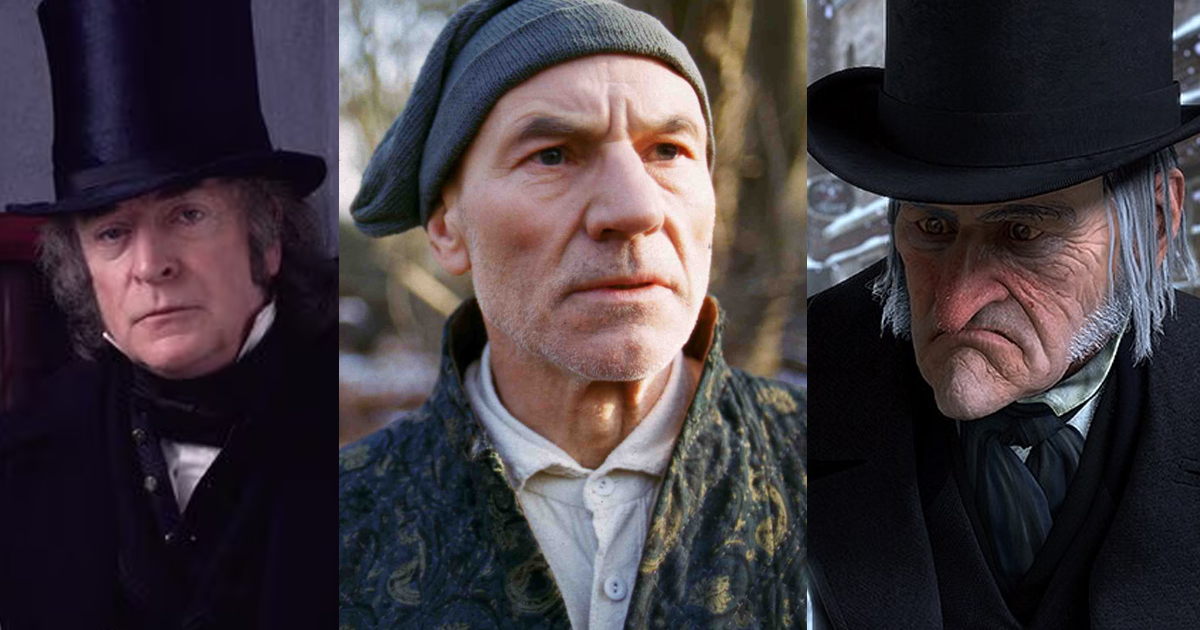
Charles Dickens’ A Christmas Carol has been adapted for film and television dozens of times since its publication in 1843. From Alastair Sim and George C. Scott to Michael Caine and Jim Carrey, generations of actors have offered their interpretations of Ebenezer Scrooge. However, some of the most familiar elements of these adaptations never actually appeared in Dickens’ original story.
With Johnny Depp taking on the role in Ebenezer, opening this weekend, audiences will have another opportunity to revisit the classic Christmas tale. Directed by Ti West, the new adaptation, which also stars Ian McKellen as Jacob Marley, Rupert Grint as Bob Cratchit and Sam Claflin as Scrooge’s nephew Fred, promises a darker interpretation of Dickens’ story.
So which previous adaptation comes closest to the book? To determine the ten most accurate versions, we examined the analysis presented in Watch Quill’s video essay, A Christmas Carol: Which Scrooge Is Actually Dickens’s?, Jeffrey Kranz’s paragraph-by-paragraph comparison of 21 adaptations, and Penguin Books’ examination of the most faithful film and television versions.
Accuracy means more than simply including the familiar ghosts and Tiny Tim. Particular attention was given to how closely each adaptation follows Dickens’ characterization of Scrooge, the events shown to him by the three spirits, the original dialogue and narration, and smaller details frequently eliminated from screen versions.
One of the most important distinctions involves Scrooge himself. Dickens never provides an elaborate explanation for why he became bitter and greedy. Although the Ghost of Christmas Past reveals an unhappy childhood, the defining moment comes when Belle ends their engagement because Scrooge has chosen money over love. Several famous adaptations substantially rewrite that history.
With those considerations in mind, here are the ten most accurate adaptations of A Christmas Carol, ranked.
10. A Christmas Carol (1997)
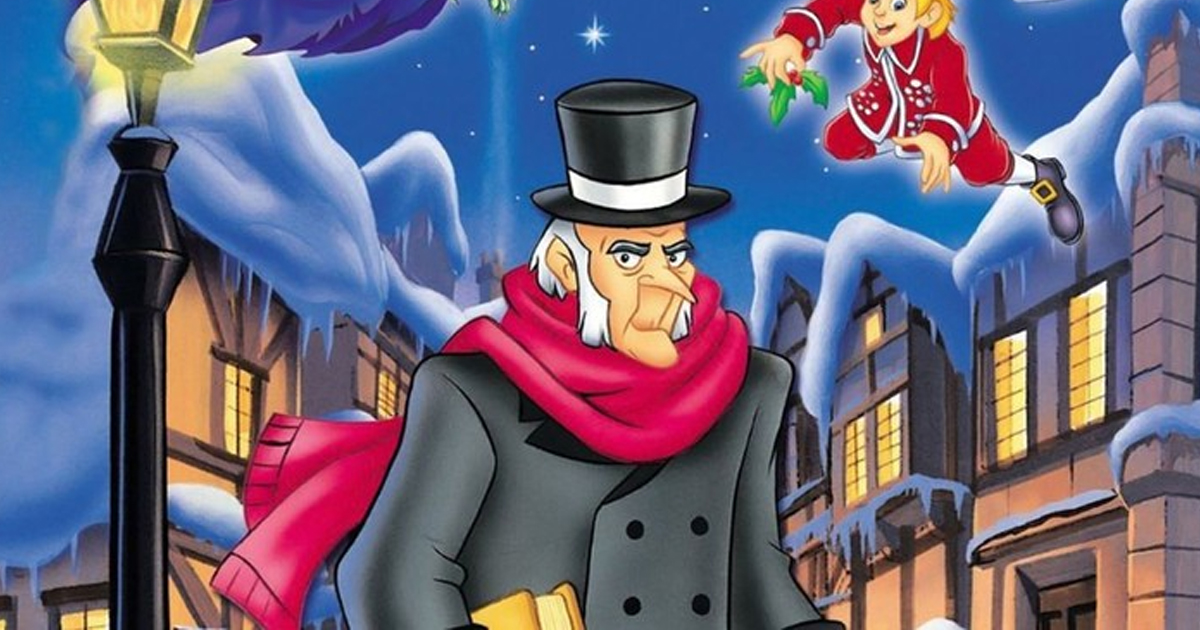
This animated version starring Tim Curry as the voice of Scrooge rarely appears near the top of lists of great Christmas Carol adaptations, but it contains considerably more Dickens than its Saturday-morning-cartoon appearance might suggest.
The film received a 33.2% faithfulness score in Jeffrey Kranz’s comparison, retaining a substantial amount of dialogue from the novella. Some relatively minor passages that most adaptations ignore are even expanded into full sequences.
The movie nevertheless makes significant changes, particularly involving Fred. Dickens uses Scrooge’s nephew as an important counterpoint to his uncle: Fred remains generous and compassionate even while Scrooge ridicules him. The animated film reduces that relationship considerably.
Although the songs and animation give the film a lighter tone, it retains more of Dickens’ writing than viewers might expect. Its willingness to expand certain passages also distinguishes it from adaptations that simply rush through the story’s most recognizable moments.
9. The Muppet Christmas Carol (1992)
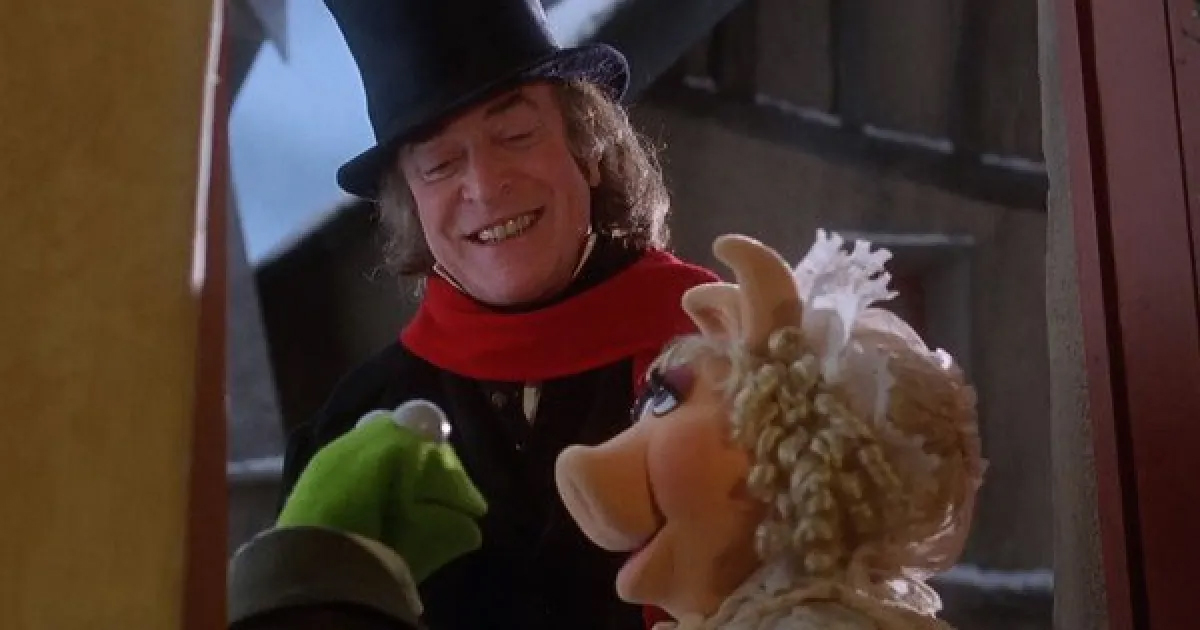
Yes, the one with Kermit the Frog is one of the most faithful adaptations ever made. Despite its comedic approach and unconventional casting, The Muppet Christmas Carol preserves important aspects of Dickens’ writing that many more traditional versions overlook.
In terms of sheer material included, it actually ranks lower than several other adaptations. With a 33.3% faithfulness score, the film makes substantial changes to accommodate its unusual cast. What pushes it higher on this list is the decision to make Charles Dickens himself a character.
Gonzo serves as Dickens, narrating portions of the story using language taken directly from the novella. That allows the movie to retain something nearly every adaptation loses: Dickens’ narrator.
That distinction matters because A Christmas Carol was written almost like a ghost story being told directly to the reader. Dickens occasionally addresses his audience, creating an intimacy that traditional film adaptations struggle to reproduce.
Michael Caine also plays Scrooge completely seriously despite being surrounded by Muppets. More importantly, the film correctly makes Scrooge’s pursuit of wealth, rather than an invented traumatic childhood, the primary cause of his lost relationship with Belle.
The film’s restored version also includes “When Love Is Gone,” the song associated with Belle ending their engagement. Although the song itself is an invention, the scene preserves the emotional turning point Dickens considered essential.
The result is an adaptation that takes considerable liberties with its presentation but remains remarkably faithful to the spirit and characterization of the original story. It demonstrates that an adaptation doesn’t necessarily need realistic characters or a traditional presentation to capture Dickens’ intentions.
8. Scrooge (1935)
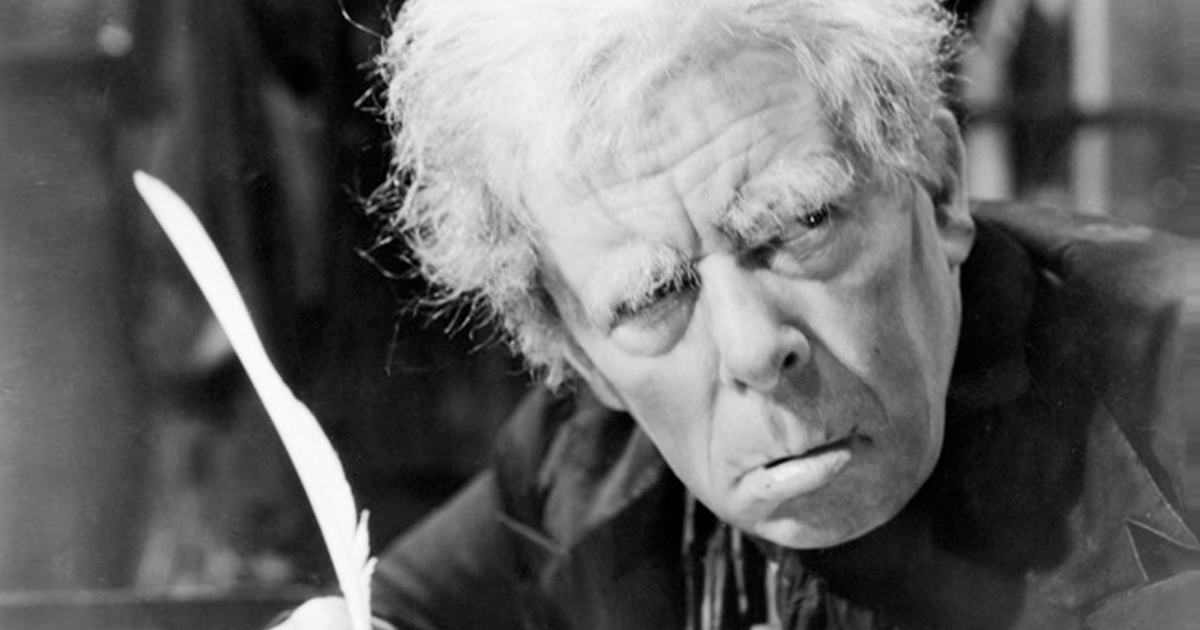
Seymour Hicks had already played Scrooge extensively onstage before starring in this early sound adaptation. His familiarity with the character helped produce a surprisingly faithful interpretation, particularly considering the film’s approximately hour-long running time.
The movie received a 36.4% faithfulness score, with only 2.8% of its material contradicting the original text. In other words, its biggest problem is not changing Dickens so much as simply leaving large portions of him out.
The essentials remain intact: Scrooge’s miserly existence, Marley’s warning, the three spirits, Belle, the Cratchits, Tiny Tim and the horrifying realization that the unloved dead man whose possessions are being sold is Scrooge himself.
Its brevity prevents it from becoming the definitive adaptation, but when the 1935 film does use Dickens, it generally stays close to him. The result is a condensed but recognizable version that demonstrates how much of the original story can be preserved without extensive rewriting.
7. A Christmas Carol (1971)
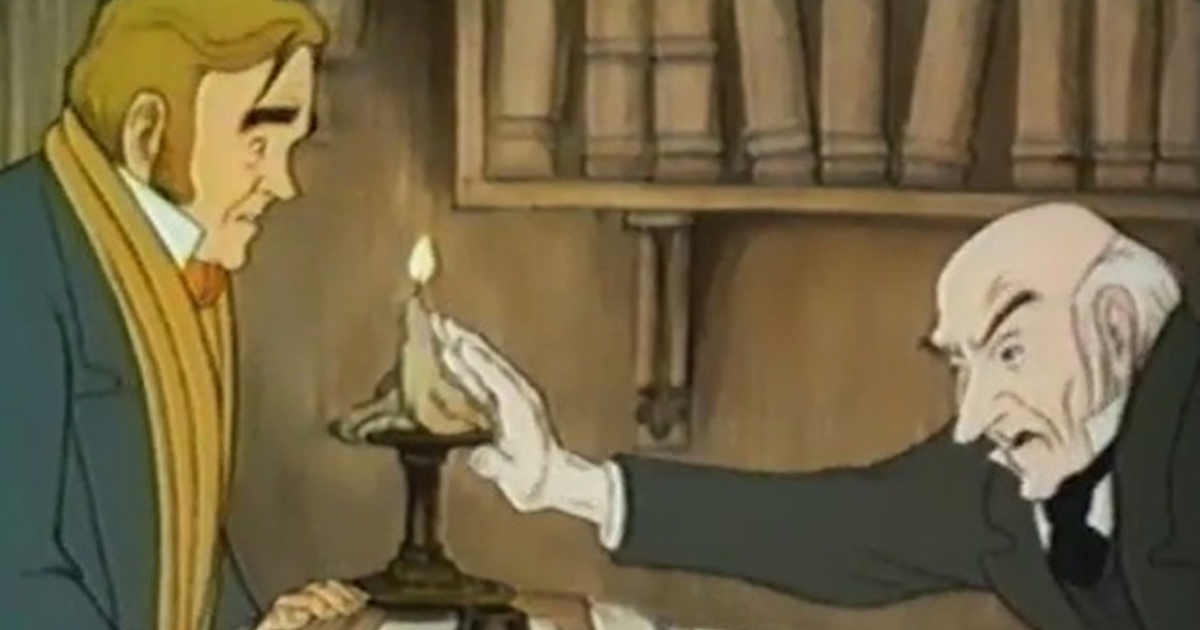
Richard Williams’ animated television adaptation accomplishes something remarkable: it runs less than half an hour and still manages to preserve material that feature-length adaptations routinely eliminate.
Alastair Sim returns to voice Scrooge, two decades after his celebrated 1951 live-action performance. The production also features Michael Redgrave as the narrator and Michael Hordern reprising his role as Jacob Marley.
The film received a 41.8% faithfulness score and an extraordinarily low contradiction score of just 0.9%. Its relatively short running time means much of the novella must be condensed, but the material that survives remains remarkably close to Dickens.
The visual approach is another reason it belongs here. Its animation draws heavily upon the original illustrations by John Leech, giving the supernatural sequences a distinctly Victorian appearance.
More importantly, the adaptation preserves such commonly discarded material as Scrooge reading alone at school, the Ghost of Christmas Present’s visits beyond the Cratchit home, and the horrifying children Ignorance and Want.
Those children are particularly important. Dickens describes them as emaciated and animalistic before the spirit warns Scrooge, and the reader, to beware them. The scene represents some of Dickens’ strongest criticism of poverty and society’s indifference toward suffering children, yet numerous adaptations remove it altogether.
By retaining this material, the 1971 version preserves the darker social commentary that gives Dickens’ story much of its meaning. It remains one of the most effective condensed adaptations of the novella.
6. A Christmas Carol (1938)
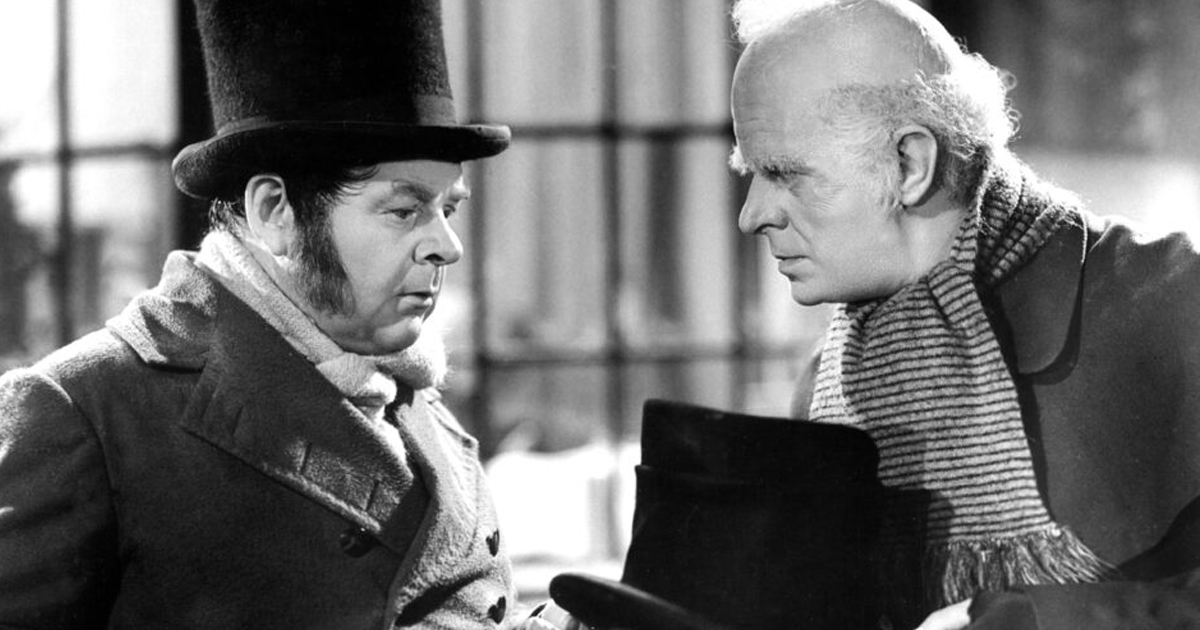
MGM’s 1938 production starring Reginald Owen became one of the first Christmas Carol adaptations to reach a mass moviegoing audience, and much of Dickens’ basic story remains recognizable.
The film received a 44.9% faithfulness score, putting it comfortably above the average adaptation in Kranz’s comparison. However, its position on this list requires an asterisk because several important elements of the original story were substantially altered or eliminated.
The movie makes several major changes. Scrooge fires Bob Cratchit after Bob accidentally hits him with a snowball, while Belle and Fezziwig are removed. It also eliminates the suffering spirits outside Scrooge’s window and Ignorance and Want, reducing some of the novella’s darker social commentary.
Those are substantial losses, particularly because Dickens’ criticism of poverty and indifference is central to the story rather than incidental decoration. Removing Belle also eliminates one of the clearest demonstrations of how Scrooge’s obsession with money destroyed his personal relationships.
Still, the movie retains enough of the novella’s structure, characters and Victorian atmosphere to remain one of the more recognizable traditional adaptations. Its accessibility helped introduce Dickens’ story to generations of moviegoers, even if some of the author’s sharper observations were softened along the way.
5. Scrooge (1951)
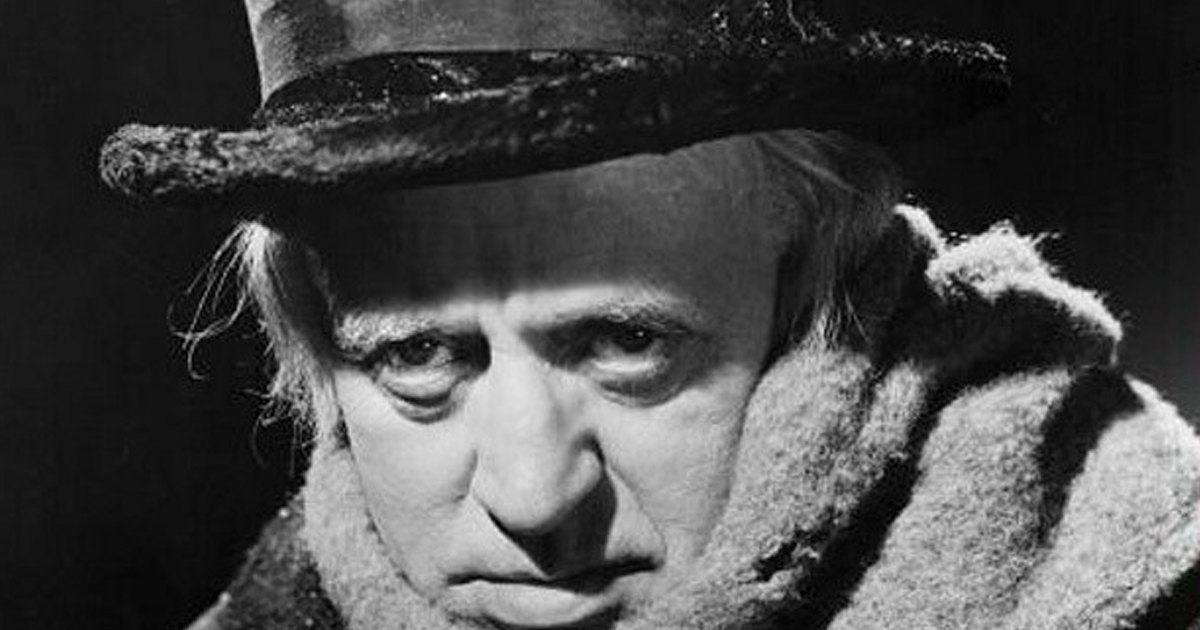
For generations of viewers, Alastair Sim wasn’t simply an actor playing Ebenezer Scrooge. He was Ebenezer Scrooge, delivering a performance that continues to define the character for many audiences more than seven decades later.
As a movie, Scrooge remains one of the finest adaptations ever made. As a literal adaptation of Dickens, however, its reputation for absolute faithfulness is somewhat overstated.
The film received a 46.2% faithfulness score. It preserves considerable Dickens dialogue and includes details often dropped elsewhere, including the blind man’s dog avoiding Scrooge, the Ghost of Christmas Present visiting a mining community and material from Fred’s Christmas party.
Its largest deviation involves Scrooge himself. The film creates a far more elaborate explanation for his personality, changing important aspects of the character’s childhood and family relationships.
Scrooge’s mother dies giving birth to him, and his father blames the boy for her death. Fan is also changed from Scrooge’s younger sister into his older sister, contradicting the relationship Dickens established in the novella.
Those additions make Scrooge more psychologically understandable, but they also soften Dickens’ point. Dickens does not absolve Scrooge by providing an elaborate childhood trauma. His defining failure is his own decision to place wealth ahead of human relationships.
Sim’s transformation on Christmas morning remains one of the most memorable moments in any adaptation. His mixture of disbelief, laughter and overwhelming happiness captures the emotional release Dickens describes, even if the film takes liberties with how Scrooge reached that moment.
Sim may still be the greatest screen Scrooge, but he isn’t quite Dickens’ Scrooge. That distinction illustrates the difference between an outstanding performance and a strictly faithful adaptation.
4. A Christmas Carol (1984)
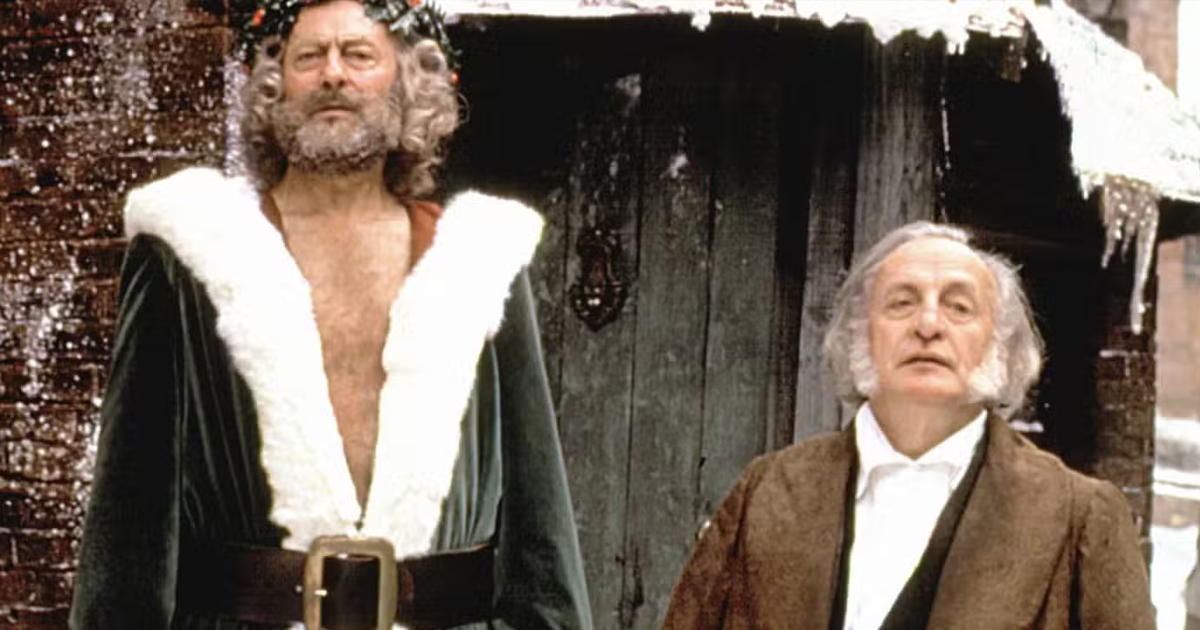
George C. Scott’s television adaptation is frequently described as the most faithful version of A Christmas Carol, and there is good reason for that reputation.
The production preserves a great deal of Dickens’ dialogue and was filmed in Shrewsbury, England, giving Victorian London a convincing physical presence. The movie received a 53.1% overall faithfulness score and a 60.5% inclusion score.
Scott’s Scrooge is also unusually effective because his cruelty isn’t reduced to cartoonish grouchiness. He is intelligent, contemptuous and completely capable of explaining his worldview, making his eventual transformation particularly satisfying.
The film retains Ignorance and Want and much of the darker material surrounding the spirits. It also gives Marley genuine menace, with Frank Finlay delivering one of the most unsettling portrayals of the character.
But once again, the adaptation changes Scrooge’s childhood by putting his father onscreen and expanding the suggestion of an unhappy home life beyond what Dickens actually wrote. This provides a more explicit explanation for Scrooge’s emotional isolation than the novella offers.
The film is extraordinarily faithful in plot, atmosphere and dialogue, but slightly less faithful to Dickens’ conception of Scrooge himself. Nevertheless, its attention to the original story’s darker elements makes it one of the strongest traditional adaptations.
3. A Christmas Carol (2013)
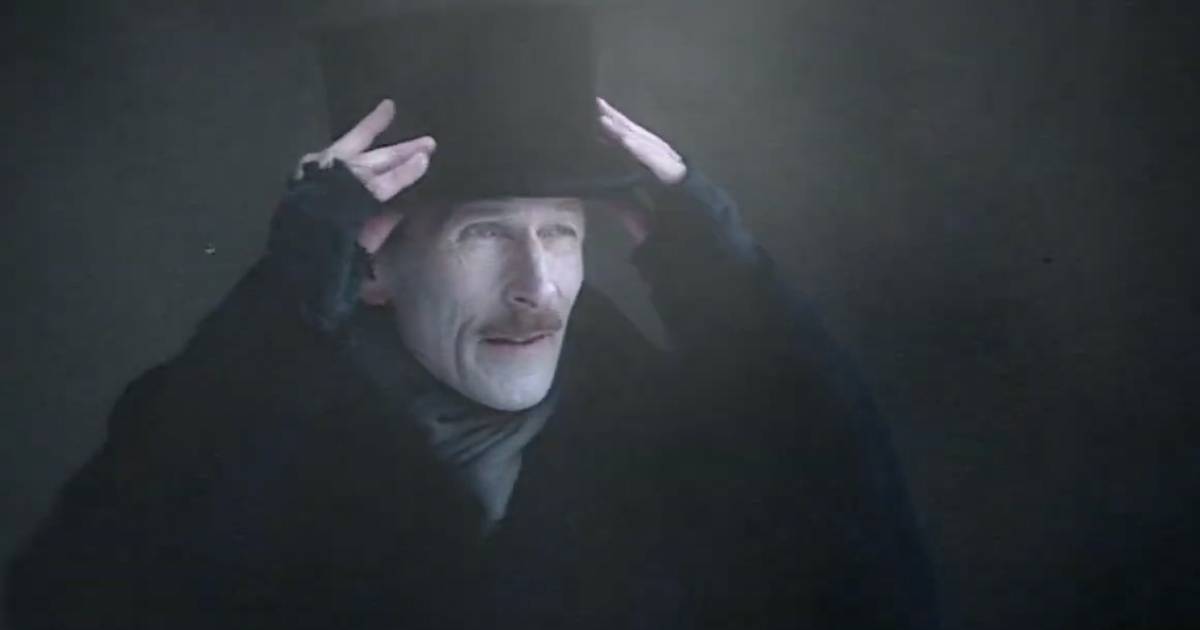
This is likely the least familiar title on the list. Jason Figgis’ low-budget adaptation lacks the stars and production values of the Scott, Stewart and Disney versions, but it compensates with an unusually close relationship to Dickens’ text.
The film received a 54.5% faithfulness score, placing it third among the 21 adaptations examined by Kranz. Its contradiction score was only 2.6%, indicating that relatively little of the material it presents directly conflicts with the original novella.
The production frames the story around Dickens telling his tale, providing a natural reason for so much of the author’s language to survive. While some scenes are altered or condensed, much of the dialogue remains recognizably Dickens.
That approach helps preserve the literary qualities that often disappear when the story is translated to the screen. Rather than relying entirely on visual spectacle, the adaptation allows Dickens’ words to carry much of the narrative.
It is a useful reminder that production value and adaptation fidelity aren’t necessarily connected. A lavish movie can radically rewrite its source, while a modest production can remain extremely close to it.
For viewers specifically interested in seeing Dickens’ novella rather than merely another interpretation of it, this overlooked version deserves considerably more attention. Its high placement also demonstrates why the most famous adaptations aren’t necessarily the most accurate.
2. Disney’s A Christmas Carol (2009)
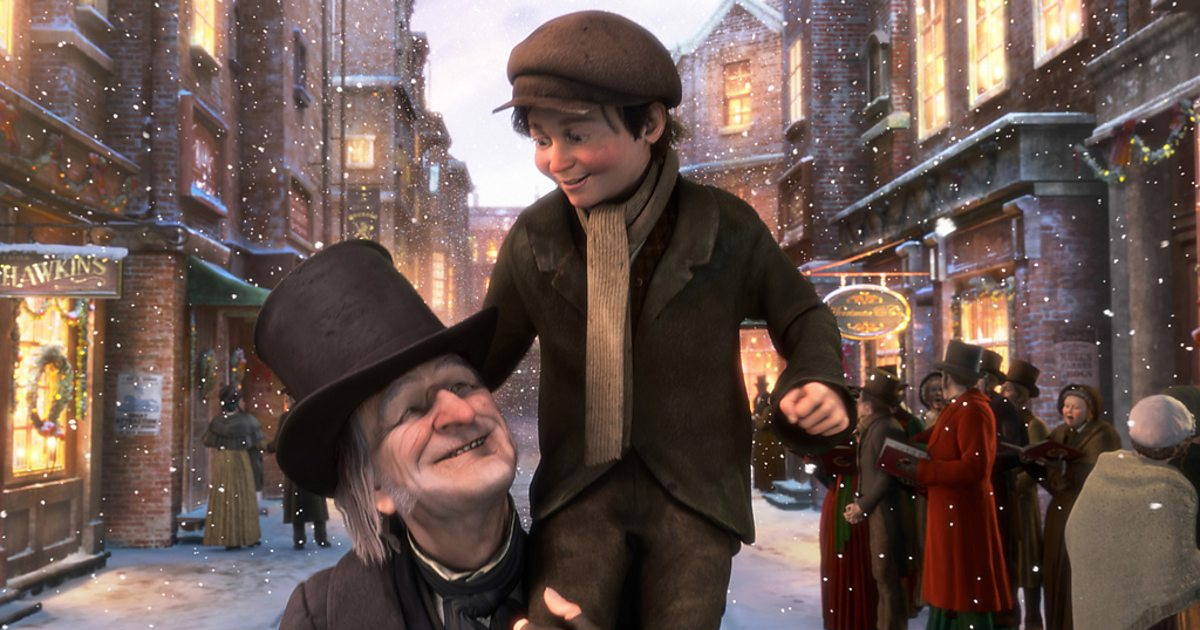
Robert Zemeckis’ motion-capture adaptation is remembered for its elaborate 3D visuals and Jim Carrey playing multiple roles. Beneath all that spectacle, however, is one of the most textually faithful Christmas Carol adaptations ever filmed.
The movie received a 59.4% faithfulness score and a 64.7% inclusion score, placing it among the closest screen adaptations of Dickens’ novella.
The film announces its intentions immediately by opening with Dickens’ book before transitioning into the story. It retains an unusual amount of the novella’s language and imagery, including material many adaptations discard.
Most importantly, it keeps Ignorance and Want. It also avoids giving Scrooge an elaborate invented explanation for his greed, keeping Belle’s rejection and Scrooge’s devotion to money at the center of his transformation into the miser we meet years later.
The film also attempts to reproduce the strange physical appearance of the Ghost of Christmas Past, whom Dickens describes as simultaneously resembling a child and an old man, with a brilliant light emanating from the top of its head.
Its greatest departures come from Zemeckis’ elaborate action sequences, particularly those involving the Ghost of Christmas Yet to Come. These scenes were designed to take advantage of the film’s 3D presentation but introduce spectacle that Dickens never wrote.
Despite those additions, the 2009 adaptation preserves more of the original novella than nearly every other major screen version. Its combination of textual accuracy and visual invention makes it one of the most ambitious interpretations of Dickens’ supernatural story.
1. A Christmas Carol (1999)
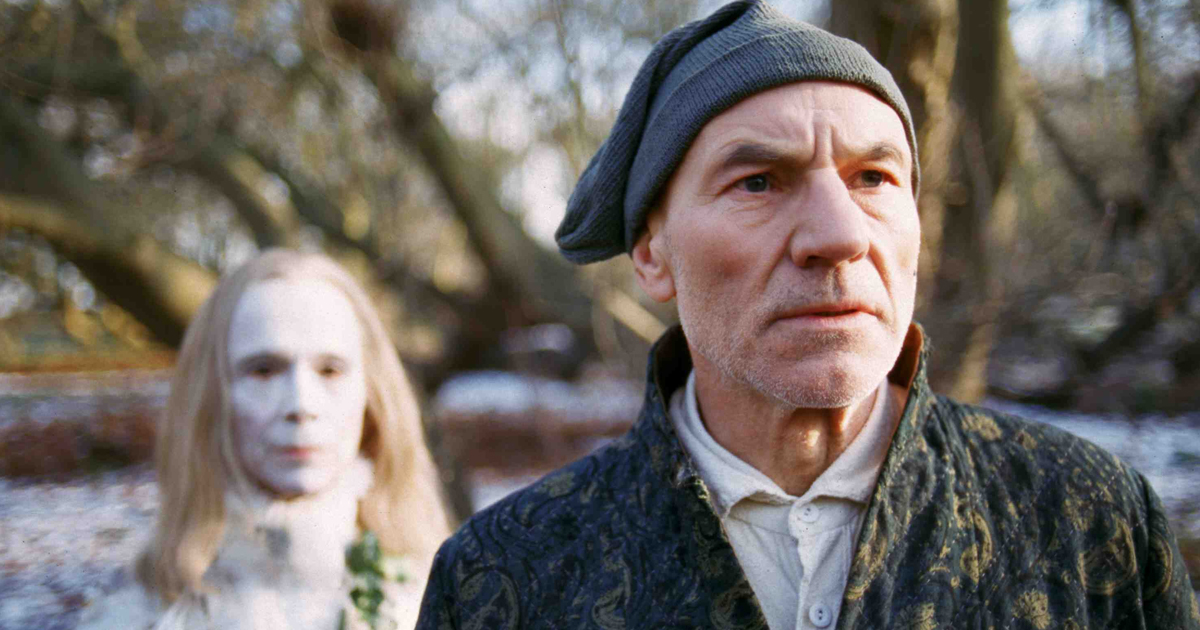
If the question is which screen adaptation comes closest to Charles Dickens’ A Christmas Carol, Patrick Stewart’s 1999 version has the strongest claim. The film received a 62.5% faithfulness score and a 66.9% inclusion score, the highest of the 21 adaptations examined in Kranz’s comparison.
Stewart also came to the production with an unusual relationship to the material. His Scrooge grew out of the one-man version of A Christmas Carol he had performed onstage for years, playing the characters himself. That familiarity with Dickens’ language is evident throughout the film.
More importantly, the adaptation passes three important tests of accuracy. First, it doesn’t manufacture an elaborate traumatic explanation for Scrooge’s greed. His failed relationship with Belle remains rooted in his growing obsession with wealth, preserving Dickens’ emphasis on personal responsibility.
Second, it retains important material surrounding the spirits, including Ignorance and Want. It also preserves some of the less famous destinations visited by the Ghost of Christmas Present, including the mining community, lighthouse and ship at sea, sequences most adaptations sacrifice for time.
Finally, it allows Dickens’ language to drive the story rather than treating the novella merely as a framework for a new interpretation. Stewart’s experience performing the material onstage helps give his portrayal a theatrical quality that suits Dickens’ original storytelling style.
Then there is Christmas morning. Dickens’ transformed Scrooge isn’t merely nicer. He is almost delirious with happiness, laughing after years of having seemingly forgotten how. He grabs the bed curtains because their continued presence proves the terrible future shown to him hasn’t happened. He secretly sends an enormous turkey to the Cratchits, nervously walks past Fred’s house repeatedly before finally entering, and waits until the following morning to surprise Bob with his raise. Those details reveal why accuracy matters. A Christmas Carol isn’t simply a story about a mean old man frightened into becoming nice. Dickens wrote about someone rediscovering his ability to participate in humanity.
Patrick Stewart’s version understands that better, and preserves more of the story Dickens actually put on the page, than any other major screen adaptation. His performance also captures the mixture of terror, regret, humor and renewed joy that makes Scrooge’s transformation so memorable.