
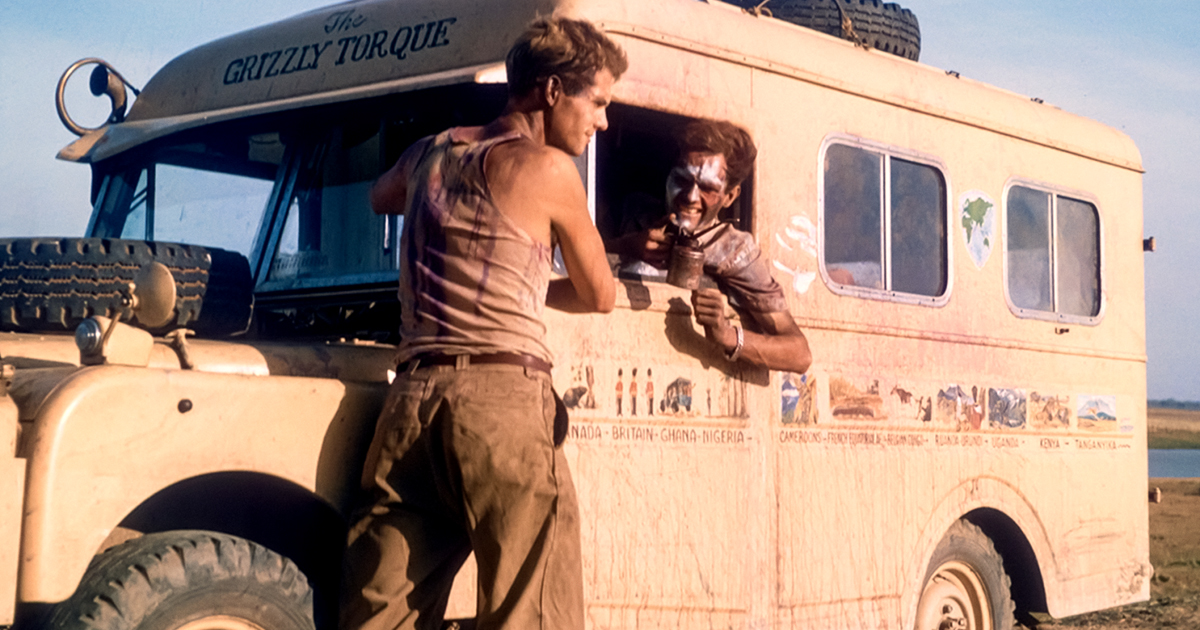
The documentary The Art of Adventure follows Canadian friends Robert Bateman, a budding wildlife artist, and Bristol Foster, a conservation biologist, and their journey circumnavigating the world in the 1950s The film chronicles the incredible discoveries they made and the hardships they endured, and places focus on the impact their efforts in their respective fields would eventually have on the world of conservationism.
Directed by Alison Reid, the director of The Woman Who Loves Giraffes, the critically acclaimed documentary about the late zoologist Anne Innis Dagg, The Art of Adventure is a fascinating and touching portrayal of the friendship of two men who have dedicated their lives to nature and preservation.
Robert Bateman and Bristol Foster crossed 19 countries across 4 continents, including Africa, Asia, and Australia, starting from the UK in 1957. Along with them for the ride was the Grizzly Torque, a modified Land Rover that served as not only their mode of transportation, but also their home, scientific station, and traveling studio. Foster documented their journey with a 16mm camera, while Bateman captured their surroundings in paintings. They pair also documented their travels via a series of nearly real-time articles for the newspaper The Toronto Telegram.
The film also features present-day interviews with Bateman and Foster (who are now both in their 90s), as well as their families, so we are treated to first-hand accounts of their incredible voyage. The footage and accounts of their trip serve as a background for their eventual incredible careers. Robert Bateman would go on the become a world-renowned and painter known for his highly detailed, realistic depictions of wildlife, while Foster became the director of the Royal British Columbia Museum and helped establish over 100 ecological reserves to protect fragile ecosystems.
Reid wisely allows Bateman and Foster’s story to speak largely for itself. The archival footage is remarkable, not simply because of its age, but because of how immediate it makes a journey that took place nearly 70 years ago feel. Combined with Bateman’s artwork, photographs, newspaper accounts, and the present-day interviews, it gives the documentary a richness that goes beyond a conventional travelogue.
The Art of Adventure never loses sight of the friendship at the center of the story. Bateman and Foster’s affection for one another remains evident decades later, and their recollections are often warm, funny, and surprisingly moving. Their youthful sense of adventure also takes on greater significance as the film reveals how those experiences helped shape the work they would pursue for the rest of their lives.
There is an appealing modesty to the film as well. Reid doesn’t need to manufacture drama or overstate the importance of the journey. The places they visited, the images they captured, and the lives they went on to lead provide more than enough reason to keep watching.
The film has a very sweet, unexpected ending that bring their incredible journey full circle. Ultimately, The Art of Adventure is as much a celebration of a lifelong friendship as it is a testament to the lasting impact two curious young men would have on conservation and our appreciation of the natural world.
You can find a list of U.S. and Canadian screenings of The Art of Adventure HERE.
Quick Scan
‘The Art of Adventure’ is a warm and engaging documentary about adventure, friendship, and two men whose lifelong love of nature left a lasting mark on conservation.