
Robert Louis Stevenson’s Treasure Island has been adapted countless times since its publication in 1883, and the next version is already preparing to take some significant liberties with the source material. MGM+’s six-part Treasure Island series is currently streaming, with David Oyelowo as Long John Silver, Tom Sweet as Jim Hawkins, Hayley Atwell as Jim’s mother, Bess, and Tomer Capone as Billy Bones.
Rather than disappearing from the story shortly after its opening as Jim’s mother does in Stevenson’s novel, Bess will join her son on the adventure aboard the Hispaniola, becoming a major character throughout the series. It is hardly the first adaptation to play fast and loose with Stevenson, but it does offer another reminder of how frequently filmmakers have treated Treasure Island as a foundation rather than an untouchable text.
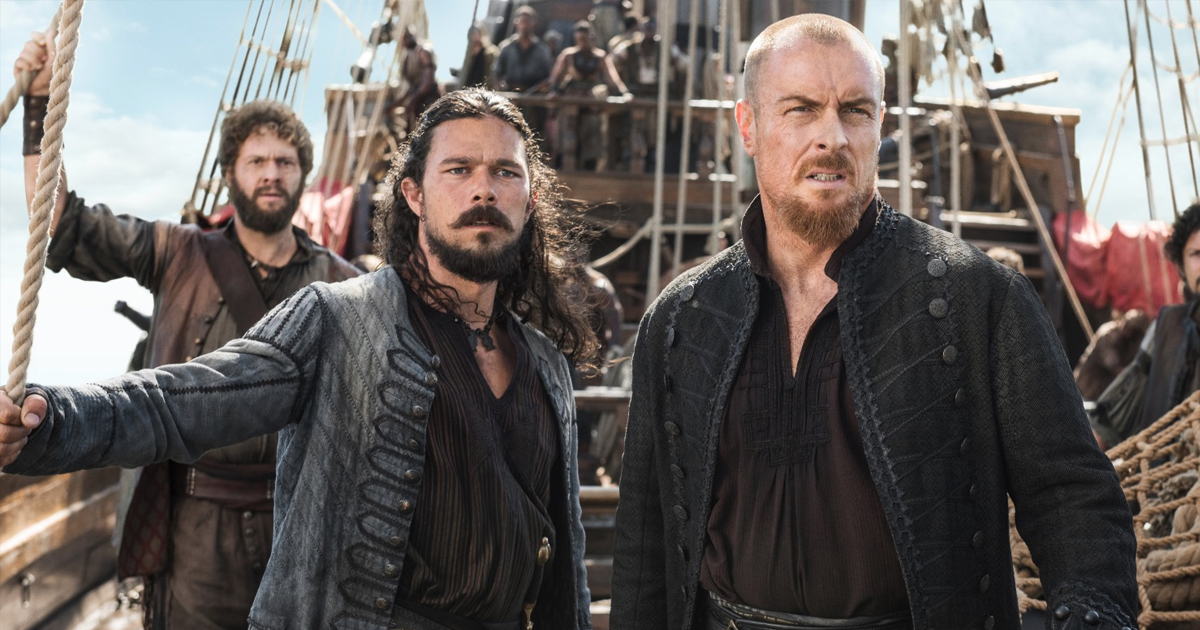
Nearly a decade before MGM+ set sail for Treasure Island, Starz’s Black Sails attempted something considerably more ambitious: telling the story that supposedly happened before the book. Running for four seasons from 2014 to 2017, Black Sails begins roughly two decades before Treasure Island and combines Stevenson’s fictional pirates with real figures from the Golden Age of Piracy. Captain Flint (Toby Stephens), Long John Silver (Luke Arnold), Billy Bones (Tom Hopper), Ben Gunn (Chris Fisher) and Israel Hands (David Wilmot) coexist with historical pirates including Charles Vane, Jack Rackham, Anne Bonny, Benjamin Hornigold and Edward Teach, better known as Blackbeard.
The series was never intended to adhere slavishly to Stevenson. Co-creator Jonathan E. Steinberg described it early on as “very loosely structured as a prequel,” while Steinberg and Robert Levine later explained that their goal was to get the surviving characters close enough to their literary counterparts that Treasure Island could feel like the next chapter. That raises an interesting question more than a decade after Black Sails premiered: How close did they actually get?
The answer is surprisingly complicated.
Captain Flint
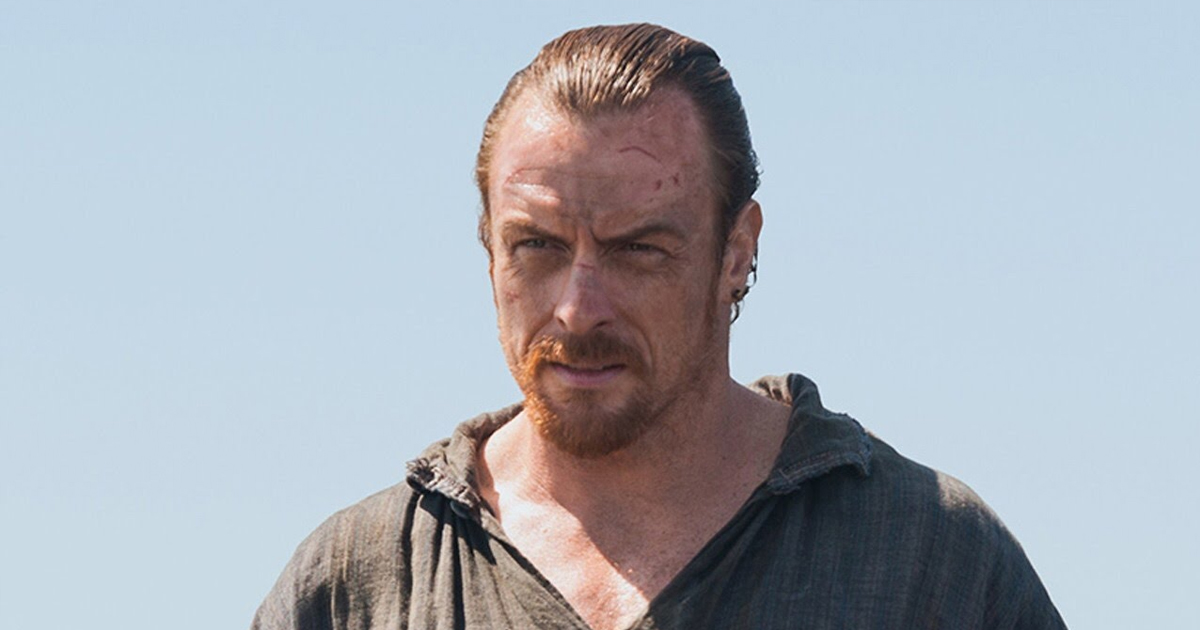
The biggest advantage Black Sails had was that Stevenson never actually introduces Captain Flint. He is already dead when Treasure Island begins, existing almost entirely through the memories of the pirates who survived him. That gave Black Sails enormous freedom to create a history for one of literature’s most infamous pirates.
The series reveals that Captain Flint was originally James McGraw, a British naval officer whose relationship with Thomas Hamilton ultimately contributed to his transformation into the feared pirate captain. His war against England eventually becomes ideological as well as personal. None of this comes from Stevenson, but very little directly contradicts him either because Treasure Island simply doesn’t tell us who Flint was before he became Flint.
Where the two versions become difficult to reconcile is Flint’s fate. In Treasure Island, Silver says Flint “died of rum at Savannah.” Black Sails cleverly gets Flint to Savannah, but under dramatically different circumstances. Silver secretly arranges for him to be taken to a plantation where Thomas Hamilton, long believed dead, is being held. The final episode shows Flint reunited with Thomas and apparently abandoning his life as Captain Flint.
That connection was intentional. Steinberg said the writers specifically wanted to address the novel’s peculiar reference to Flint dying in Savannah and give it emotional context. It is a clever bridge, but not a literal one. For Stevenson’s version to remain completely true, Flint would still have to leave Thomas, return to his old ways and eventually drink himself to death in Savannah.
There is another possibility, however, that fits remarkably well with the themes of Black Sails: the story of Flint drinking himself to death could simply be that—a story. The series repeatedly explores the way legends replace complicated realities, particularly when those legends are repeated by people who were not there to witness what actually happened.
Long John Silver
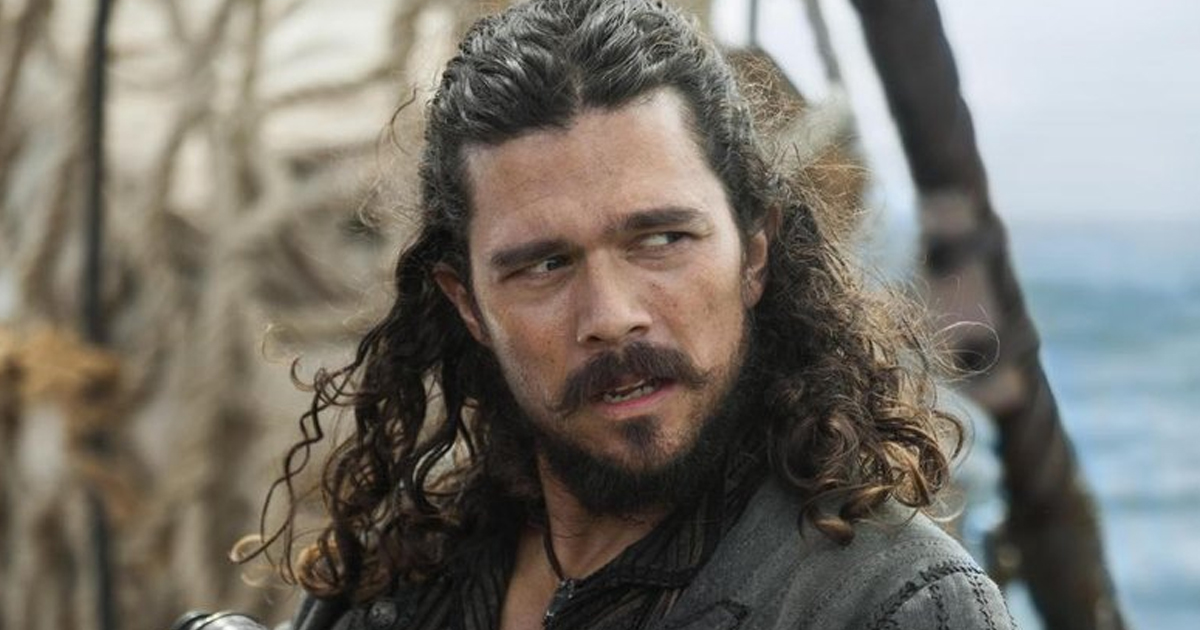
If Black Sails succeeds anywhere as a Treasure Island prequel, it is with Long John Silver. When the series begins, Silver isn’t even really a pirate. He is a charming opportunist who talks his way aboard Flint’s ship and gradually becomes indispensable. Over four seasons, he becomes a leader, loses his leg, earns the loyalty of pirates and eventually becomes Flint’s quartermaster.
That last detail is important because Stevenson explicitly establishes that Billy Bones was Flint’s mate and Silver his quartermaster. Even more intriguing is something Stevenson says about the relationship between Silver and Flint. Despite Flint’s terrifying reputation, Silver claims that Flint himself was afraid of him. Ben Gunn independently remembers that Flint feared nobody except Silver.
Stevenson never explains why Flint would fear his own quartermaster, leaving behind one of the novel’s most tantalizing pieces of unexplored history. Black Sails essentially spends four seasons providing an answer. Silver begins as Flint’s subordinate, becomes his closest confidant and eventually grows powerful enough to stop him. He doesn’t defeat Flint in a sword fight or overthrow him for treasure; he defeats him because he understands him.
Seen through that lens, Black Sails makes one of Stevenson’s unexplained character relationships suddenly make sense. It also gives the later Long John Silver a history worthy of his reputation, showing how an apparently insignificant cook could eventually become the one man even Captain Flint had reason to fear.
There is still a significant gap between the two versions of Silver. The man we leave at the end of Black Sails has chosen Madi over piracy, while the Silver we meet in Treasure Island is running the Spy-glass tavern in Bristol before secretly recruiting pirates for the voyage aboard the Hispaniola and engineering a mutiny to recover Flint’s treasure. Something clearly has to pull him back into his old life.
The creators intentionally left that story untold. Levine said their objective was to leave Silver, Billy and Hands in positions from which Treasure Island could become their “next logical chapter.” That means the Silver of the series finale is not yet completely the Long John Silver Jim Hawkins will eventually meet.
Billy Bones
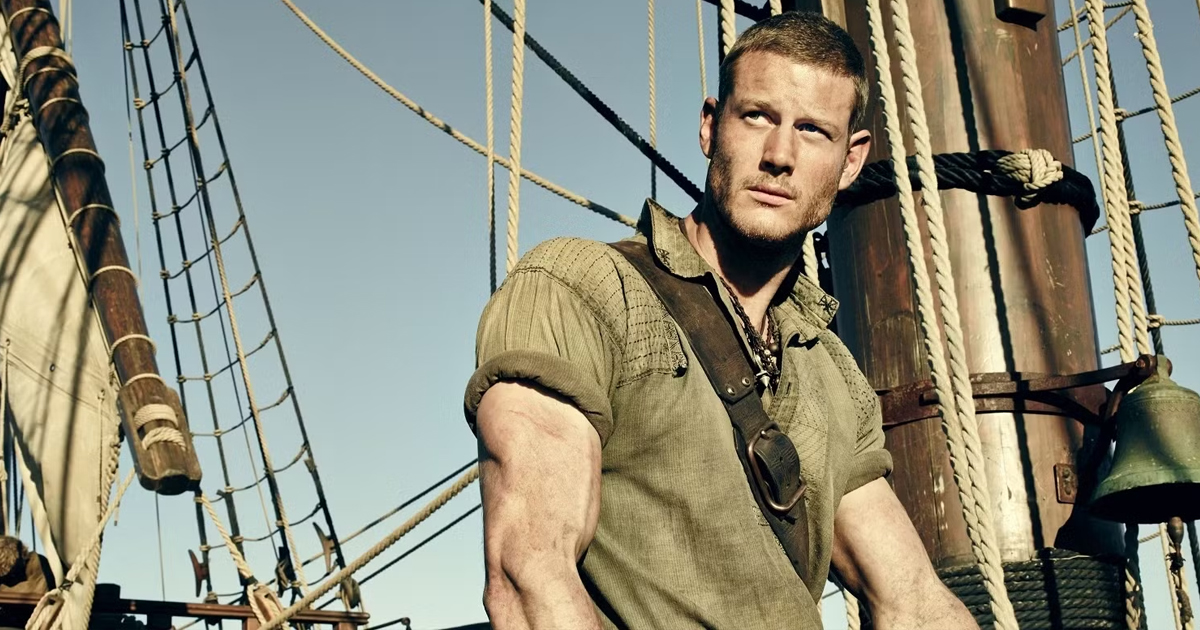
Billy Bones is where the seams between Black Sails and Treasure Island become considerably more visible. Stevenson’s novel begins with Billy arriving at the Admiral Benbow Inn carrying the sea chest containing Flint’s treasure map. He is hiding from his former shipmates, who eventually track him down in their effort to recover it.
We later learn that Billy wasn’t merely another member of Flint’s crew. He was Flint’s mate, an important position that places him near the center of Flint’s old pirate company. Black Sails never quite gets him there in the same way Stevenson describes.
Billy spends much of the series serving under Flint but eventually becomes his bitter enemy. By the final season he has also turned against Silver. Psychologically, that works extremely well as groundwork for Treasure Island, since it establishes plenty of reasons for Billy to eventually separate himself from his former companions and fear their return.
The logistical connection is much weaker. Black Sails never explains how Billy eventually obtains Flint’s treasure map, nor does it establish the exact circumstances that will send him into hiding with Flint’s former crew pursuing him. There is therefore an entire missing Billy Bones adventure between the end of Black Sails and his arrival at the Admiral Benbow.
Ben Gunn
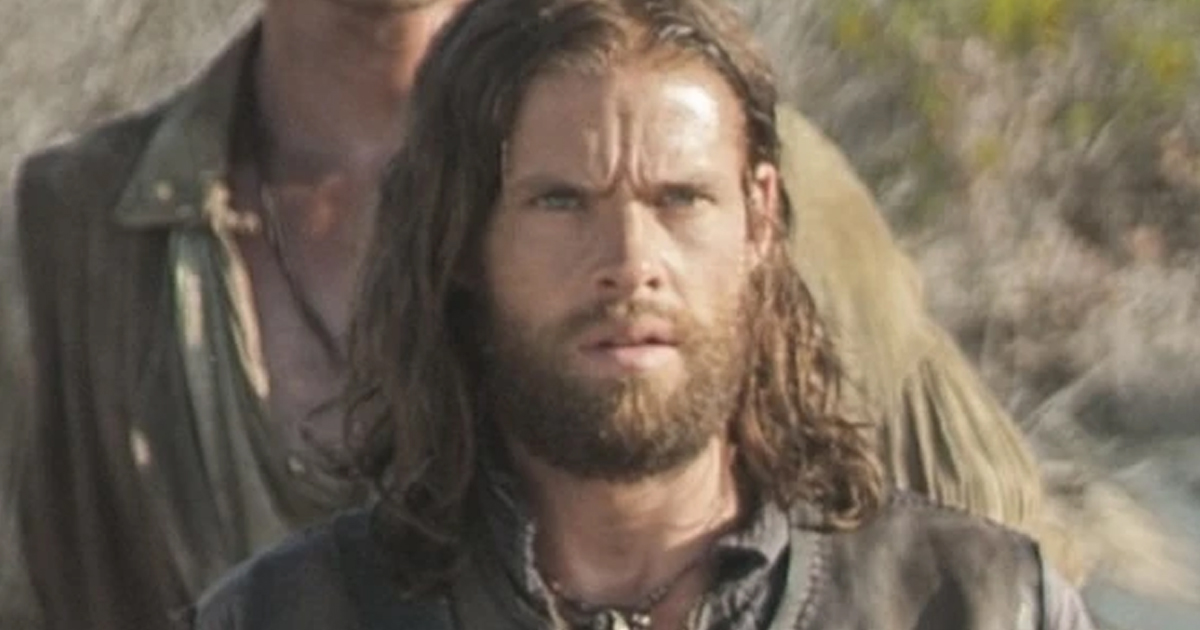
Ben Gunn presents an even bigger continuity problem because Stevenson provides a surprisingly detailed history for him. Gunn tells Jim that he was aboard Flint’s ship, the Walrus, when Flint took six sailors ashore to bury the treasure. After nearly a week, Flint returned alone. The six sailors were dead, while Billy Bones and Long John Silver remained aboard without knowing where Flint had hidden the treasure.
Years later, Gunn returned to Treasure Island aboard another ship and convinced its crew to search for Flint’s treasure. After twelve fruitless days, his shipmates abandoned him there with a musket, spade and pickaxe. By the time Jim meets him in Treasure Island, Gunn has been marooned for three years and has already discovered and relocated Flint’s treasure.
Almost none of that has happened when Black Sails ends. The show introduces Gunn, but he still has to experience most of the events that Stevenson explicitly places in his past. His appearance therefore functions more as connective tissue between the series and novel, or perhaps an elaborate Easter egg, than a completed origin story.
That doesn’t necessarily make the two versions impossible to reconcile. It simply means that an enormous amount still has to happen to Gunn between the Black Sails finale and Treasure Island, including some of the most important events in the entire history of Flint’s treasure.
Israel Hands
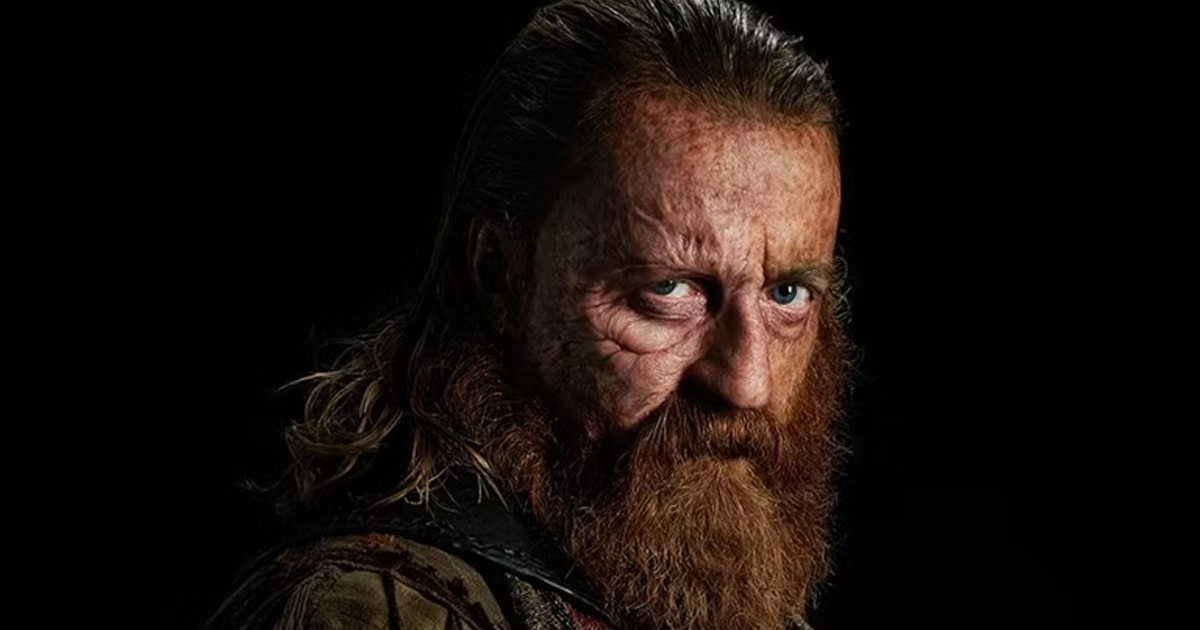
Israel Hands creates a similar problem. In Treasure Island, Hands becomes one of Silver’s mutineers aboard the Hispaniola, but Stevenson also makes his earlier history unmistakably clear: Israel Hands was Flint’s gunner.
Black Sails introduces Hands very late in its run, primarily establishing his relationship with Silver rather than Flint. He becomes one of Silver’s most dangerous followers, which works nicely as groundwork for his eventual participation in the Hispaniola mutiny, but the series never establishes the history with Flint that Stevenson says he had.
Again, the series gets the character into approximately the correct circle without completing the journey. Hands could theoretically serve under Flint sometime after the events depicted in Black Sails, but that requires events beyond the series to fill the gap.
The Treasure Itself
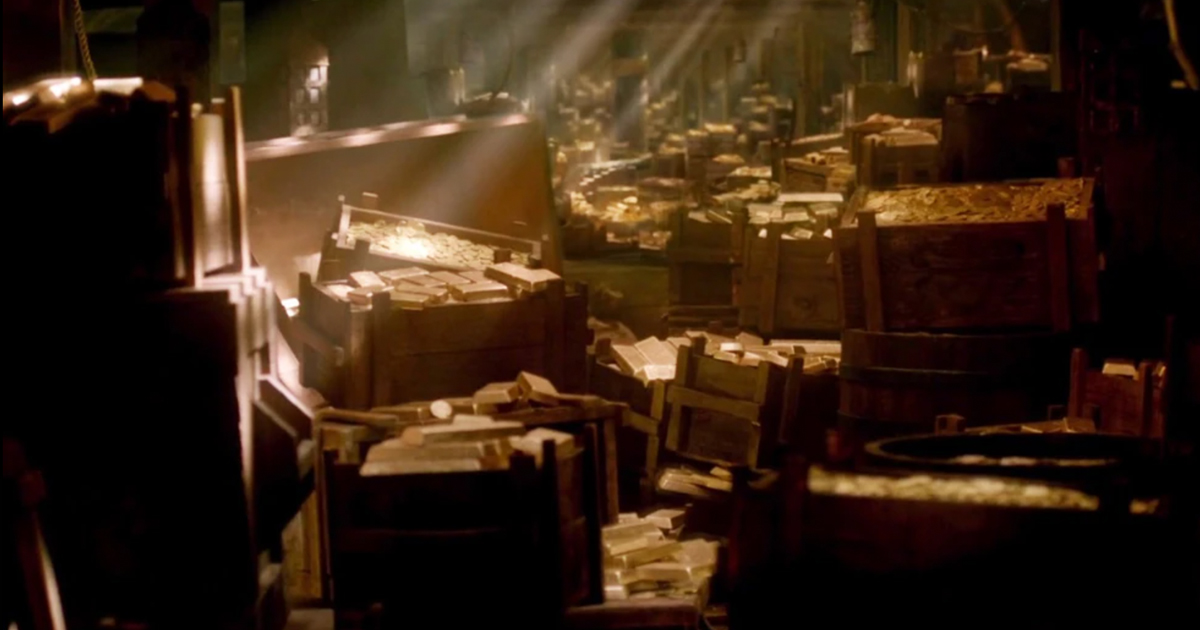
Then there is the rather important matter of the treasure, which may be Black Sails’ largest direct discrepancy with Treasure Island. Stevenson’s account is remarkably specific about how Flint’s fortune ended up buried on the island.
Flint sails to Treasure Island aboard the Walrus and takes six strong sailors ashore with him. Nearly a week later, Flint returns to the ship alone. All six men are dead. Billy Bones and Long John Silver remain aboard the Walrus, with Bones serving as mate and Silver as quartermaster, and neither knows where Flint buried the treasure.
That isn’t what happens in Black Sails. The treasure driving the later seasons originates with the Spanish Urca de Lima. Jack Rackham eventually acquires the remaining cache, which becomes entangled with Flint and Silver’s war before being taken to Skeleton Island.
The series therefore succeeds in getting a massive cache of treasure to the general place it needs to be, but its history isn’t Stevenson’s history. Flint does not take six men ashore, murder them and return alone to the Walrus while Silver, Bones and Gunn wait aboard. That isn’t a minor discrepancy, either; it is the foundational event behind the treasure in Treasure Island.
This is also where the idea that Treasure Island represents the legend rather than the literal history of Black Sails becomes particularly useful. If the two stories must correspond exactly, the treasure creates a serious continuity problem. If Stevenson’s account is instead viewed as the version of Flint’s story that survived years later, the contradiction becomes easier to accommodate.
Madi and Mrs. Silver
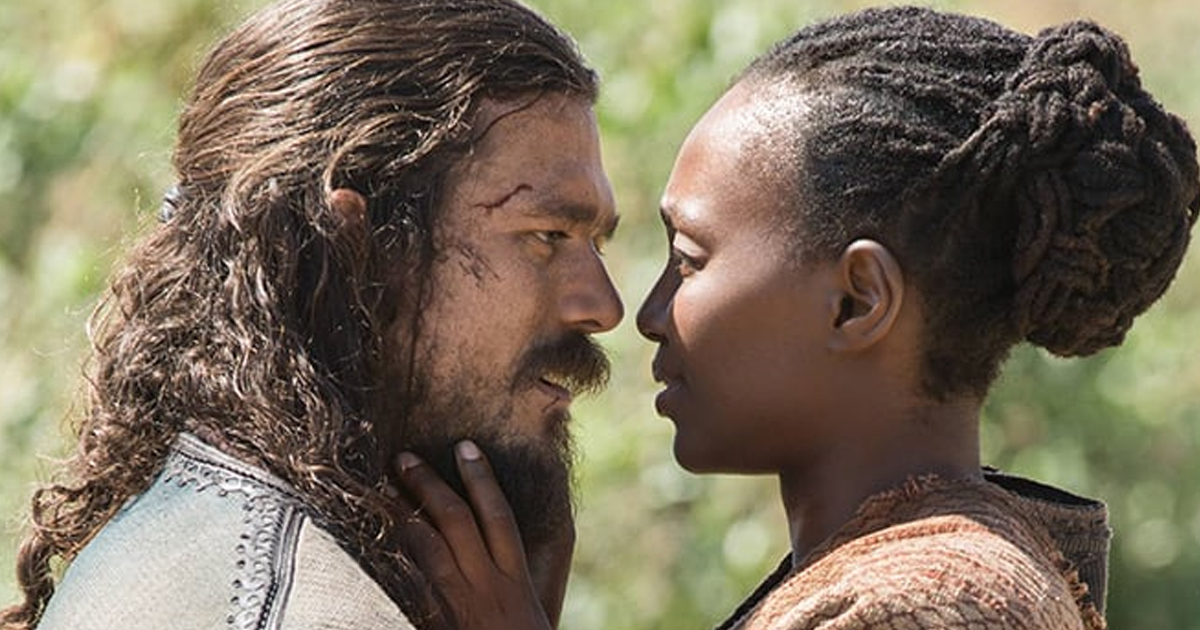
There is another intriguing connection that Black Sails leaves tantalizingly unresolved. Stevenson tells us that Silver is married to a woman of color, who remains behind to manage his affairs while he joins the Hispaniola expedition. Stevenson never gives her a name or tells us much more about her.
Black Sails gives Silver his defining romantic relationship with Madi, a Black woman who becomes one of the most important people in his life. The series never explicitly establishes that Madi becomes Silver’s wife, and their relationship is badly damaged by his actions in the finale, but the parallel is difficult to overlook.
Whether Madi is intended literally to become the unnamed Mrs. Silver or simply represents Black Sails taking one of Stevenson’s tiny pieces of character information and building an entire person around it remains unresolved. Either way, it is another example of the series finding a few words in Stevenson and using them to construct an elaborate backstory.
The Missing Pirates
There are other pieces still missing by the time Black Sails reaches its finale. Blind Pew and Black Dog, who play crucial roles in the opening chapters of Treasure Island, aren’t meaningfully established by the series. Silver still has to acquire his famous parrot, Captain Flint, while Billy still needs the treasure map and Ben Gunn still needs to be marooned.
Most importantly, Silver still needs to return to piracy. The series finale isn’t really the day before the opening chapter of Treasure Island, despite Black Sails being commonly described as a prequel set roughly two decades earlier. There is still another substantial, unwritten chapter between them.
That may have been intentional. Steinberg eventually summarized the creators’ philosophy simply: “the book is the book, and the show is the show.” The two could share a universe and inform one another without every piece of their respective histories overlapping perfectly.
That distinction explains many of the apparent contradictions. Black Sails works far better as an explanation for the legend behind Treasure Island than as a literal account of everything Stevenson says happened.
Stevenson’s Flint is a monster remembered by frightened old pirates, while Black Sails gives us the human being who existed before that legend. Stevenson tells us Flint feared Silver; Black Sails shows us why he might have. Stevenson says Silver was Flint’s quartermaster; the series shows how an insignificant opportunist could become powerful enough to earn that position. Billy Bones goes from Flint’s loyal subordinate to an enemy of both Flint and Silver, while even Flint’s mysterious death in Savannah is transformed into something completely different while still getting him to Savannah.
The details don’t always match, but the relationships frequently do. That makes Black Sails a strange kind of prequel. Read Treasure Island immediately after watching the finale and there are numerous factual discrepancies that are impossible to ignore, yet the characters Stevenson introduces suddenly carry histories the novel never supplied. The show may not perfectly explain how every piece of Flint’s treasure ended up where Stevenson said it did, but it gives us compelling reasons for Silver, Billy and the others to become the men Stevenson eventually introduces.
More than 140 years after Stevenson first introduced Long John Silver, adaptations are still rewriting those histories. MGM+’s Treasure Island will send Jim Hawkins’ mother aboard the Hispaniola and place her directly in an adventure Stevenson largely reserved for her son. Black Sails took the opposite approach: instead of changing Jim Hawkins’ story, it looked backward and imagined the story that might have created Silver, Bones, Gunn and the legendary Captain Flint in the first place.
It doesn’t always lead perfectly into Treasure Island, and in several important instances it directly contradicts Stevenson’s version of events. Yet Black Sails also understands something that feels entirely appropriate for a story about pirates: history and legend are rarely the same thing. By the time Jim Hawkins hears the name Captain Flint, perhaps what matters isn’t whether every detail of the story is true, but how the story became a legend in the first place.